71
ORNITHOLOGIST
A person who
studies birds.
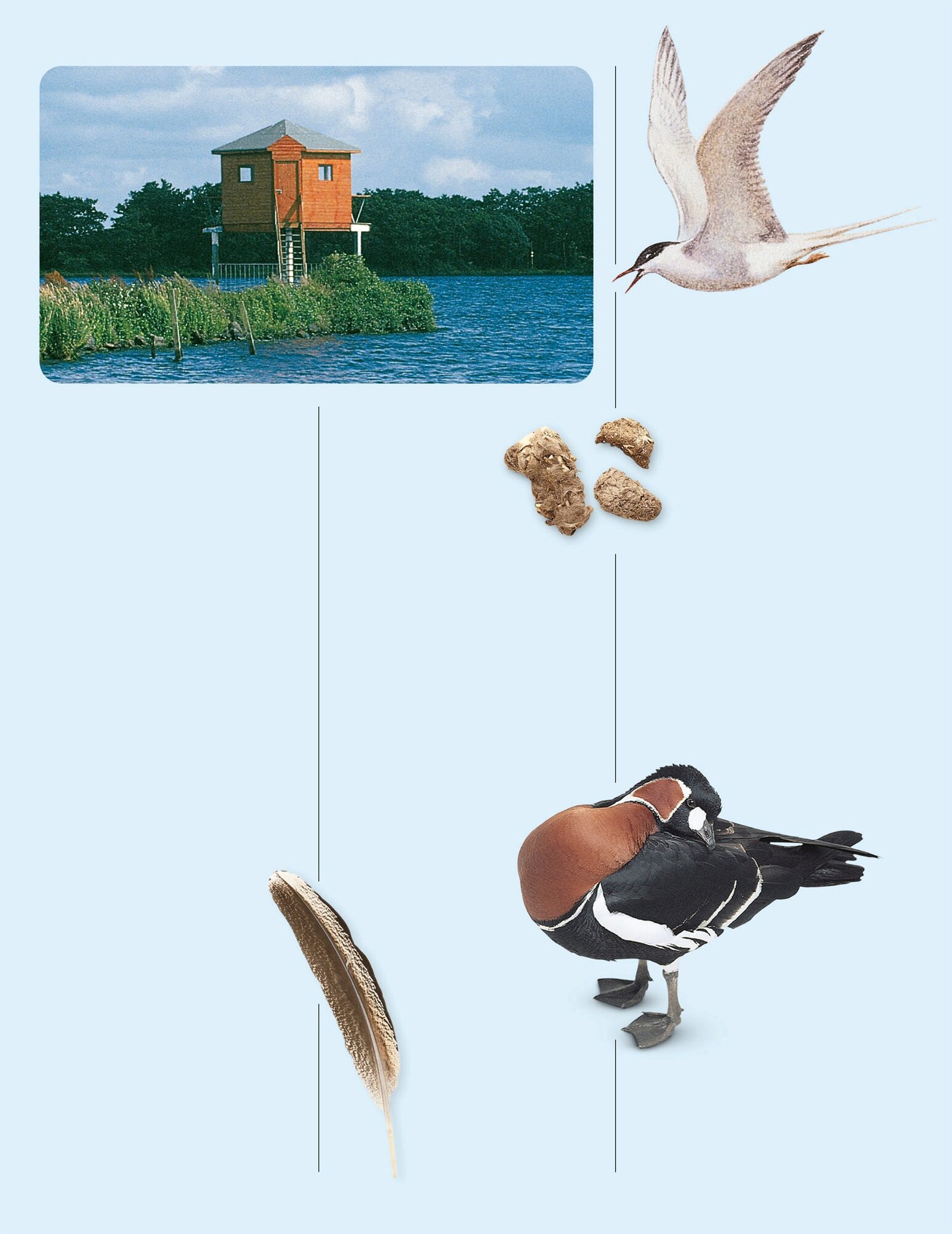
PELLET
A hard lump of
indigestible bits of food,
such as fur and bones, that
birds regurgitate.
PLUMAGE
A bird’s feathers.
POWDER DOWN
Special feathers on
some birds that disintegrate to form
a powder, which the bird uses to
clean its plumage.
PREDATOR
An animal that kills another
animal for food.
PREENING
The way in which birds keep their
feathers in good condition, drawing them
through their beaks to clean them.
PREY
An animal that is hunted and killed
by another animal.
PRIMARY FEATHERS
The long
flight feathers on the outer
half of the wings, used for
steering and turning.
QUILL
The long, hollow
central shaft of a
bird’s feather.
REGURGITATE
To
bring food that has
been swallowed back
up into the mouth again,
often to feed the young.
ROOST
To settle down to
rest, normally overnight.
SCAVENGER
A bird, such as a
vulture, that searches for dead
animals to eat.
HIDE
A structure or small building where
people can hide to watch birds without
disturbing them.
INCUBATION
Providing constant
warmth for eggs so that chicks can
develop inside them. Most birds incubate
their eggs by sitting on them to keep
them warm.
INVERTEBRATE
A type of small animal
that has no backbone, such as a worm.
IRIDESCENT
The glittering sheen on
some feathers and other objects that
appears to change colour depending
on the direction of the light.
KEEL
A large, plate-like extension of
a flying bird’s breastbone, which anchors
its powerful wing muscles in place.
KERATIN
A type of protein from which
feathers, hair, nails, and hooves are made.
MANDIBLE
One of the two parts of
a bird’s beak (bill). The upper mandible
is the top part, and the lower
mandible is the bottom part.
MIGRATE
To travel from one place
to another regularly in search of a
plentiful food supply or good
breeding grounds.
MONOCULAR VISION
The area seen
by one eye only, rather than by both eyes
working together.
MOULTING
Shedding worn-out feathers
and growing new ones in their place.
NECTAR
The sweet liquid produced by
a flower to attract birds and insects to feed
from the flower and so pollinate it.
NESTLING
A baby bird that is still in
the nest and cannot fly.
NOCTURNAL
Active by night.
SEABIRD
Birds that spend most of
their time over the open sea and
only come ashore to breed.
SECONDARY FEATHERS
One of the
inner wing feathers.
SPECIES
A group of birds of the
same type that can breed with one
another and live in the same area.
SPECULUM
A white or coloured
patch that some ducks have across
the inner wing feathers.
STOOP
To swoop down (bird of prey).
TALONS
The sharp, curved claws
of a bird of prey.
TERRITORY
An area occupied by a bird
that it may defend against other birds of
the same species.
TERTIALS
A bird’s innermost flight feathers,
which shape the wing to the body to ensure
a smooth flight.
THERMAL
A rising column
of warm air, often at the edge
of a cliff or hillside, on which
soaring birds glide.
VERTEBRATE
Any animal that
has a backbone. Birds are vertebrates.
WILDFOWL
A wide range of mostly web-
footed birds found in, on, or near water, such
as ducks, geese and swans.
Flight feather
Hide at a bird reserve
Pellets
Seabird in flight
Red-breasted
goose preening
its feathers